
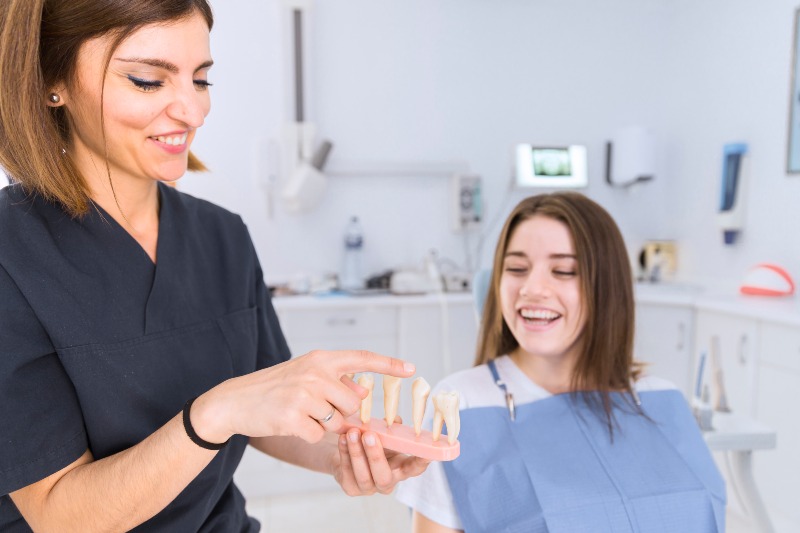
If you are missing one or more teeth and deciding between dentures and dental implants in Plymouth, you are not alone. Both dentures and dental implants can restore function and appearance. However, many patients ultimately choose implants because of how they feel, how they function, and how they fit into daily life over time.
At Haggerty Dental, our role is to explain your options, answer your questions honestly, and help you understand what may work best for your unique situation.
Understanding the Difference Between Dental Implants and Dentures
Dental implants are titanium posts placed into the jawbone to replace missing tooth roots. After a healing period, a crown, bridge, or implant-supported denture is attached. Because implants integrate with the bone, they function more like natural teeth.
Dentures are removable appliances that sit on the gums. They may replace some or all missing teeth and can be supported by the gums alone or, in some cases, assisted by implants. While dentures have improved significantly over the years, they still rely on the soft tissues of the mouth for support.
A simple way to think about the difference is that implants are anchored within the jaw, while traditional dentures rest on top of it.
Why Many Plymouth Patients Prefer Dental Implants
1. A More Natural Feel When Eating and Speaking
Once healing is complete, dental implants allow many patients to chew, speak, and smile without worrying about movement or instability. Because implants are fixed in place, they often feel closer to natural teeth than removable dentures.
For people who enjoy a wide variety of foods or who speak frequently for work or social activities, this stability can make daily life feel more comfortable and predictable.
2. Reduced Risk of Slipping or Shifting
One common concern with removable dentures is the possibility of movement during eating, laughing, or speaking. While dentures can fit well, changes in the jaw over time may still affect their stability.
Implants are secured in the jawbone, which means they do not rely on adhesives or suction. Many patients appreciate not having to think about their teeth shifting during routine activities.
3. Support for Jawbone Health
When a tooth is lost, the jawbone in that area no longer receives stimulation from chewing forces. Over time, this can lead to bone resorption, which may affect facial shape and oral health.
Dental implants help transmit chewing forces to the jawbone, which can slow bone loss in the area where the implant is placed. Dentures, while effective for tooth replacement, do not provide the same type of stimulation to the bone.
4. Simplified Daily Oral Care
Dental implants are cleaned much like natural teeth. Brushing, flossing, and regular professional checkups are essential for maintaining implant health.
Dentures require removal for cleaning, soaking solutions, and careful handling to avoid damage. Some patients prefer the simplicity of caring for implants as part of their normal oral hygiene routine.
5. Long-Term Durability With Proper Care
Dental implants are designed to be a long-lasting solution. With good oral hygiene, regular dental visits, and healthy habits, implants can function for many years.
Dentures may require relining, adjustment, or replacement as the mouth changes over time. For some patients, implants offer a sense of long-term stability that aligns with their lifestyle and expectations.
Real Reviews from Plymouth Patients
“Dr. Karl Winter is amazing! He did an implant for me yesterday, and he did such a wonderful job, I felt no pain at all, and I love how knowledgeable and passionate he was when placing it.” – Krystal E.
About The Practice: We’re known for our personalized, family-focused care. Our team helps each patient feel at home while using trusted technology to deliver lasting results. Learn more about us here.
Time to complete your smile?
Book an in-person, no-pressure restoration consultation with us today.
How long do dental implants last compared to dentures?
Dental implants are designed as a long-term tooth replacement option. With proper oral hygiene, routine dental visits, and healthy habits, implants can function for 20 years. Their longevity depends on factors such as gum health, bite forces, and overall health. Dentures, while effective, often require periodic adjustments or replacement as the shape of the jaw changes over time.
What is the healing time after getting dental implants?
Initial healing after implant placement is usually manageable, and many patients return to normal routines within a few days. However, full healing takes longer. The jawbone needs time to integrate with the implant, which can take several months. During this period, our dentist monitors healing and provides guidance to ensure the process stays on track. Have more questions? Call us at (734) 228-1120.
Are dental implants more comfortable than dentures?
Many patients report that implants feel more natural once healing is complete. Because implants are fixed in place, they do not move against the gums, which can reduce irritation. Dentures, even when well-made, may cause sore spots or require adjustments over time. Comfort is individual, but patients who value stability often prefer implants for everyday activities like eating and speaking.
How do costs differ between implants and dentures?
Dental implants generally involve a higher initial investment because they include surgical placement and custom restorations. However, implants may reduce the need for future replacements or adjustments. Dentures usually have a lower upfront cost but may require ongoing maintenance over time. Overall costs vary based on materials, customization, oral health needs, and treatment complexity. Visit our Contact page for more financing details.
Can dental implants be used if I already wear dentures?
Yes, many patients transition from dentures to dental implants. Implant-supported dentures can improve stability and comfort while still replacing multiple teeth. This option may reduce movement and improve chewing efficiency compared to traditional dentures. Each case is different, so our dentist will evaluate your existing dentures and more. Schedule a visit by calling (734) 228-1120.