
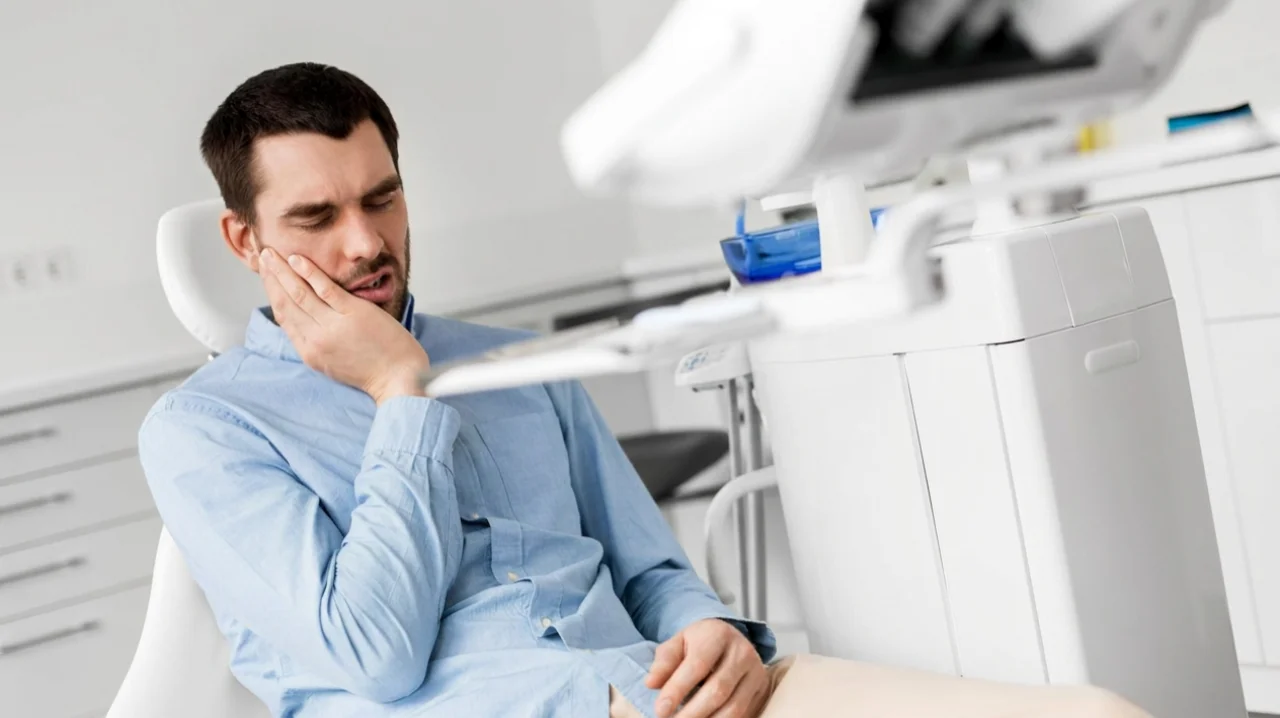
Dental implant soreness after healing is most often linked to inflammation in the gum around the implant, pressure from the bite, or food and plaque collecting around the crown. Each has a different fix, so the cause matters more than the discomfort itself.
Soreness after the first healing period is worth having checked, even when it is mild. This blog explains the common causes, how bite pressure and gum health play a part, and what a check-up usually looks for.
Common Reasons an Implant Area Feels Sore
An implant is built from several parts, and the tissue around it responds to each one. Soreness can come from the gum, the bone, the crown, or the way the teeth meet, and sometimes from more than one source at once.
- The gum around the implant is inflamed from plaque.
- The crown touches the opposing tooth too firmly.
- Food gets trapped between the crown and the neighboring tooth.
- Clenching or grinding places repeated force on the implant.
- A part of the crown or abutment has loosened.
Gum Inflammation Around the Implant
Implants do not decay, but the gum around them can still become inflamed. Peri-implant mucositis is inflammation limited to the soft tissue, with no bone loss. Past gum disease, poor plaque control, smoking, and diabetes raise the risk.
It can often be reversed if caught early. Left alone, it may progress to peri-implantitis, which also affects the supporting bone and usually needs surgical treatment. Red or tender gums and bleeding when brushing are common signs.
Bite Pressure and Clenching
A crown that sits slightly high can make an implant feel tender, because the tooth takes more force than its neighbors. Clenching and grinding add to this load, and the pressure may be felt most when chewing or first thing in the morning.
A small adjustment to the crown or a nightguard is among the options that may be discussed when bite pressure is part of the picture, along with follow-up to confirm comfort.
Signs That Call for a Check
Soreness that lasts more than a few days deserves a visit. Regular follow-up visits also catch changes early, before discomfort builds, and they give a chance to ask questions about care at home. A check is worth booking for any of the following.
- Bleeding, redness, or swelling around the implant.
- A bad taste or discharge near the gum.
- A crown that feels loose or moves slightly.
- Pain when biting that does not ease.
Implant Care in Plymouth
At Haggerty Dental, 16000 N Haggerty Road in Plymouth, Michigan, we have served families in Plymouth, Northville, and Livonia since 1986. We offer dental implants, crowns and bridges, periodontal care, and emergency care for our patients, along with family dentistry and IV sedation options.
Our office also uses digital X-rays and digital impressions, which help document the area over time. After an exam, we can explain whether soreness around an implant comes from the gum, the bite, or the crown, and what comes next for the patient.
Planning Dental Implant Care in Plymouth, MI
Soreness around a healed implant usually has an identifiable cause, and many causes are simple to correct. Patients in Plymouth, Northville, and Livonia who notice soreness after healing are welcome to have our team at Haggerty Dental check the gum, the bite, and the crown.
Frequently Asked Questions
Can an implant crown adjustment solve discomfort caused by bite pressure?
Often, yes. When the crown is the cause, we can polish a small amount from the surface so the teeth share the force. The adjustment is checked with marking paper, and a second visit may be needed.
Can food trapping around an implant crown cause localized soreness?
Yes. Food packed under the gum edge irritates the tissue, which can make one spot tender or red. Floss, small brushes, or water flossers help, and we can check whether the crown shape needs a change.
What imaging may be used to check the bone around a dental implant?
Dental X-rays show the bone height around the implant and can be compared with earlier images. When more detail is needed, a three-dimensional scan may be used. We choose based on the symptoms and the area.
How does a dentist check whether the implant itself is stable?
We gently test the implant and crown for movement, measure the gum pockets around it, and compare X-rays over time. Signs such as bleeding or deeper pockets point toward inflammation in the surrounding tissue.
What can be done at home until the appointment?
Keep the area clean with a soft brush and rinse gently with warm salt water. Avoid chewing hard foods on that side. Over-the-counter pain relievers may help if safe for the person, but they do not replace a check.