
Waking with a tight jaw and a dull ache behind the eyes is easy to blame on a rough night or a stressful week. When it keeps happening, the cause may sit in how you breathe while you sleep. This blog covers how sleep apnea can connect to teeth grinding and morning headaches, which symptoms together can point toward it, how it can affect your mouth, why a physician’s sleep study comes first, how an oral appliance fits into care and how care moves from sleep study to custom appliance.
Sleep Apnea Can Be Connected to Teeth Grinding and Morning Headaches
Sleep apnea causes repeated pauses or narrowing in breathing during sleep. Bruxism, the clenching and grinding of teeth, is sometimes seen alongside these breathing disruptions, although the connection varies from person to person.
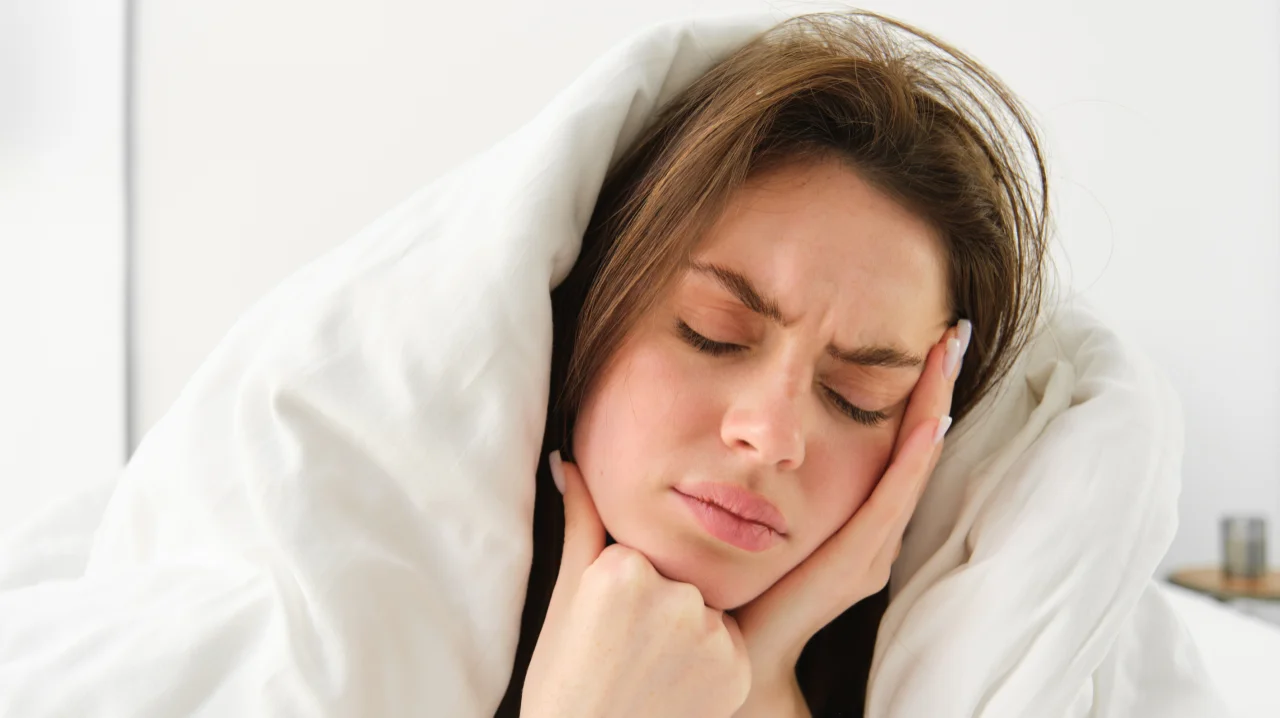
Morning headache sleep apnea is another pairing worth knowing about. Headaches felt on waking are listed among the symptoms of sleep apnea, so grinding, snoring and morning headaches appearing together deserve a conversation with a physician.
Which Symptoms Together Can Point Toward Sleep Apnea
Sleep apnea tends to appear as a cluster of symptoms rather than a single complaint. Noticing several of the following together is a good reason to raise it with a physician.
- Notice loud or chronic snoring, especially when grinding sounds come with it.
- Wake with a headache on a regular basis.
- Wake with a sore throat.
- Feel tired through the day despite a full night in bed.
- Hear from a partner about gasping, choking or pauses in breathing.
Not everyone who snores has sleep apnea, and not everyone with it snores loudly, so a physician’s assessment matters more than any single symptom.
How Sleep Apnea and Teeth Grinding Can Affect Your Mouth
Grinding and clenching place extra force on the teeth and jaw for hours at a time. Over time, this may show up in a few ways that you can notice yourself.
Worn or Flattened Teeth
Grinding can wear down the biting surfaces, which may make teeth look shorter or feel more sensitive.
Tight Jaw Muscles
Repeated clenching can leave the jaw muscles sore or tired on waking. Jaw muscle tension of this kind is often described as a tight or achy jaw in the morning.
Headaches on Waking
Headaches felt in the morning can have several causes, including sleep apnea and jaw muscle tension, which is why a physician’s input is useful.
Why a Physician’s Sleep Study Comes Before Any Treatment
Sleep apnea is diagnosed by a physician or sleep specialist, and an ear, nose and throat doctor may be involved. The diagnosis usually comes from a sleep study done at home or in a sleep lab, which measures breathing interruptions, oxygen levels, heart rate, sleep patterns and airflow.
The results show whether sleep apnea is present and guide which treatment options your physician recommends. Treatment planning, including any oral appliance, builds on that diagnosis.
How an Oral Appliance Can Fit Into Sleep Apnea Care
Once a physician has diagnosed obstructive sleep apnea and recommended it, a custom oral appliance may be an option. Worn during sleep, it is designed to help keep the airway open.
Oral appliance sleep apnea therapy is often considered by people who find CPAP hard to tolerate. The appliance is compact and portable, uses no mask or hose and runs quietly, which can make travel easier. This kind of dental sleep medicine care works alongside your physician’s recommendation.
How Care Moves From Sleep Study to a Custom Appliance
Care moves through four steps. The first is a diagnosis from a physician or sleep specialist, usually after a sleep study. The second is a comprehensive dental evaluation to confirm that an oral appliance suits your oral health and goals.
The third step is making your custom appliance, with coordination with your physician as needed. The fourth is a series of follow-up visits to check comfort, fit and oral health, with small adjustments and guidance on cleaning and storing the appliance.
Get Sleep Apnea Concerns Explained at Haggerty Dental in Plymouth, MI
Haggerty Dental in Plymouth, MI offers custom oral appliance therapy for patients with physician-diagnosed obstructive sleep apnea. Schedule a consultation to find out whether an oral appliance suits you.
Frequently Asked Questions
Does treating sleep apnea stop teeth grinding?
Not necessarily. Some people see grinding ease once breathing improves, while others continue to clench for other reasons. Haggerty Dental can review your teeth and discuss options alongside your physician’s care.
When should someone with grinding and snoring talk to a physician about a sleep study?
When the symptoms keep returning instead of appearing once, it is reasonable to ask. A physician decides whether a sleep study fits, and Haggerty Dental can review how your teeth are wearing.
When might a nightguard alone not be enough for someone with suspected sleep apnea?
A nightguard protects teeth from grinding but is not designed to address breathing, so suspected sleep apnea still needs a physician’s assessment. After a diagnosis, Haggerty Dental offers custom oral appliances for sleep apnea.
What role does a dentist play in noticing oral signs of sleep apnea?
A dentist may notice worn teeth or jaw tension during an exam and suggest speaking with a physician, but diagnosis belongs to a physician. Haggerty Dental offers dental evaluations before oral appliance therapy.
How does dry mouth relate to mouth breathing during sleep?
Breathing through the mouth during sleep can reduce moisture and leave the mouth dry on waking. Mention it to a physician, and Haggerty Dental dentists can review your oral health at a visit.